

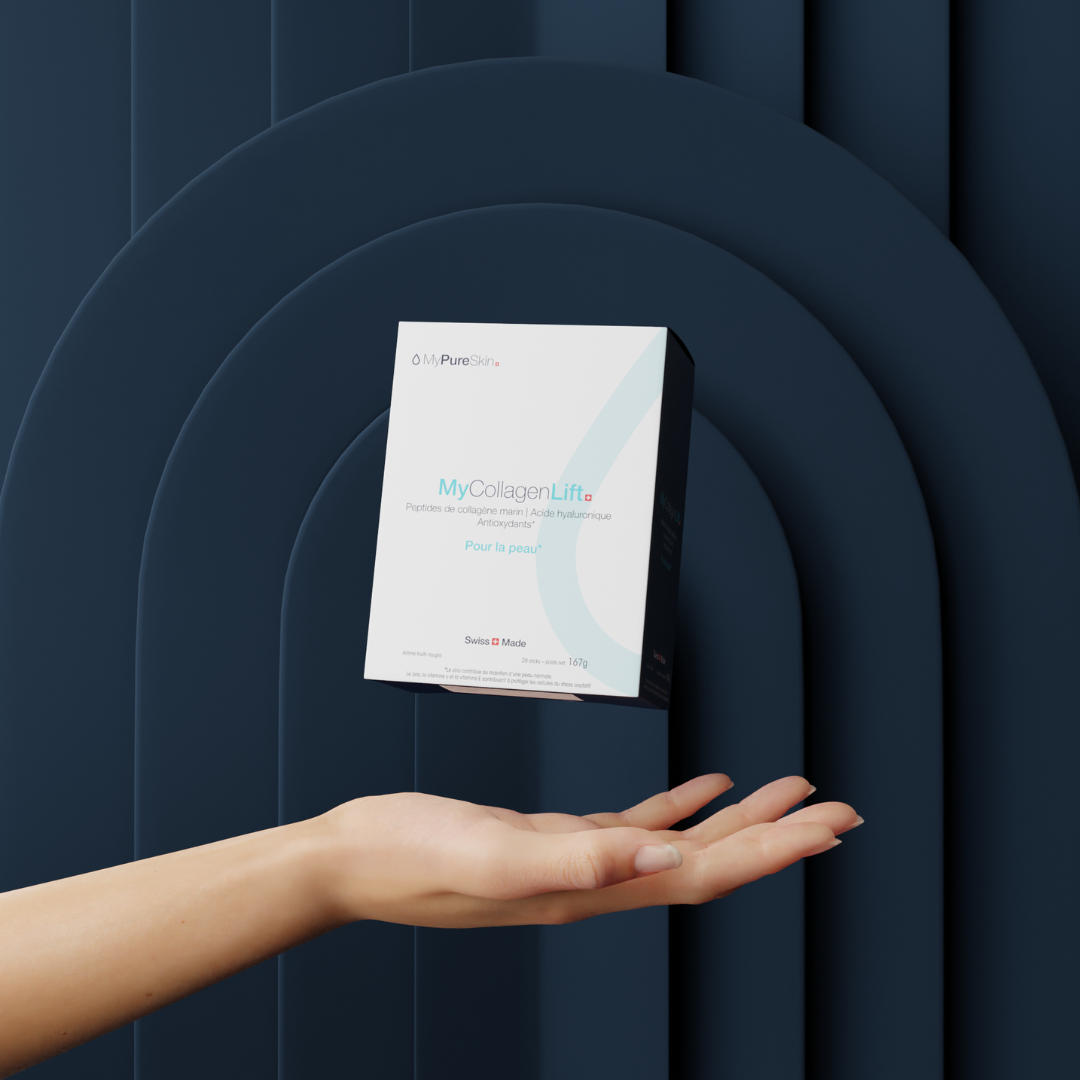
MyCollagenLift, le nutricosmétique qui régénère votre peau de l’intérieur.
Avec l’âge, nos cellules perdent leur structure, leur énergie et leur capacité de régénération. MyCollagenLift est une formule avancée à base de peptides de collagène marin, d’acide hyaluronique, de vitamines essentielles et d’antioxydants puissants. Elle soutient la fermeté de la peau, ravive l’éclat du teint et atténue les signes visibles de l’âge, tout en favorisant la souplesse articulaire et le bien-être global. Un allié beauté complet qui agit en profondeur pour renforcer la barrière cutanée et stimuler la production naturelle de collagène.
Une étude clinique développée spécifiquement pour ce produit a validé ses effets :
Skin Test Institute report CTE419A/R – Étude clinique anti-âge de 12 semaines menée en Suisse auprès de 43 femmes volontaires. Étude en double aveugle contre placebo, évaluant les bénéfices suivants : hydratation, fermeté, élasticité, rides, éclat et autres paramètres liés à l'état de la peau. Janv. 2023.
Tests réalisés dans un laboratoire en Suisse durant trois mois avec jusqu’à :
Notre expertise naturelle
Découvrez comment nos ingrédients actifs vous accompagnent au quotidien.
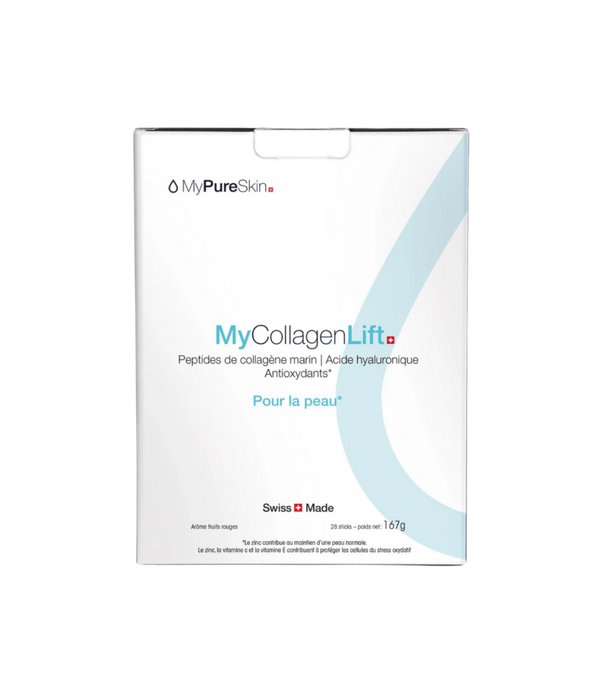
Des ingrédients ciblés pour une peau visiblement plus jeune
Une sélection de 9 actifs hautement biodisponibles, choisis pour leur efficacité prouvée et leur synergie unique au service de la jeunesse de la peau.
| Ingrédient | Description | Étude Clinique |
|---|---|---|
| Peptides de collagène marin | Soutient les fibroblastes et aide à maintenir la densité de collagène, contribuant à limiter les signes visibles du vieillissement. |
Wu M, Cronin K, Crane JS. Biochemistry, Collagen Synthesis. 2021 Sep 13. In: StatPearls [Internet]. Treasure Island (FL): StatPearls Publishing; 2022 Jan–. PMID: 29939531 Choi, F.D.; Sung, C.T.; Juhasz, M.L.; Mesinkovsk, N.A. Oral Collagen Supplementation: A Systematic Review of Dermatological Applications. J. Drugs. Dermatol. 2019, 18, 9–16. https://pubmed.ncbi.nlm.nih.gov/30681787/ |
| Acide hyaluronique | Hydrate en profondeur et soutient la souplesse de la peau en agissant sur la matrice extracellulaire. |
Papakonstantinou E, Roth M, Karakiulakis G. Hyaluronic acid: A key molecule in skin aging. Dermatoendocrinol. 2012;4(3):253-258. doi:10.4161/derm.21923 Meyer LJ, Stern R. Age-dependent changes of hyaluronan in human skin. J Invest Dermatol 1994; 102:385- 9; PMID:8120424; http://dx.doi.org/10.1111/1523- 1747.ep12371800 |
| Silicium organique | Renforce peau, cheveux et ongles ; améliore fermeté, élasticité et éclat. |
Barel, A., Calomme, M., Timchenko, A., De Paepe, K., Demeester, N., Rogiers, V., Clarys, P., & Vanden Berghe, D. (2005). Effect of oral intake of choline-stabilized orthosilicic acid on skin, nails and hair in women with photodamaged skin. Archives of dermatological research, 297(4), 147–153. https://doi.org/10.1007/s00403-005-0584-6 |
| Céramides | Renforce la barrière cutanée, soutient l’hydratation et améliore la texture de la peau, avec des effets visibles en 2 semaines. |
Bizot, V., Cestone, E., Michelotti, A., & Nobile, V. (2017). Improving skin hydration and age-related symptoms by oral administration of wheat glucosylceramides and digalactosyl diglycerides: A human clinical study. Cosmetics, 4(4), 37. https://doi.org/10.3390/cosmetics4040037 |
| Polyphénols de raisin | Protège des UV, prévient les taches, améliore élasticité et hydratation grâce aux polyphénols. |
Xia, L., Xu, C., Huang, K., Lu, J., & Zhang, Y. (2019). Evaluation of phenolic compounds, antioxidant and antiproliferative activities of 31 grape cultivars with different genotypes. Journal of food biochemistry, 43(6), e12626. https://doi.org/10.1111/jfbc.12626 Costa, A., Pegas Pereira, E. S., Assumpção, E. C., Calixto Dos Santos, F. B., Ota, F. S., de Oliveira Pereira, M., Fidelis, M. C., Fávaro, R., Barros Langen, S. S., Favaro de Arruda, L. H., & Abildgaard, E. N. (2015). Assessment of clinical effects and safety of an oral supplement based on marine protein, vitamin C, grape seed extract, zinc, and tomato extract in the improvement of visible signs of skin aging in men. Clinical, cosmetic and investigational dermatology, 8, 319–328. https://doi.org/10.2147/CCID.S79447 |
| Extrait d'acérola / Vitamine C | Source naturelle de vitamine C, antioxydant qui contribue à protéger la peau et à booster l’éclat. |
Pullar J.M., Carr A.C., Vissers M.C.M. The roles of vitamin C in skin health. Nutrients. 2017; 9:866–892. https://www.ncbi.nlm.nih.gov/pmc/articles/PMC5579659/ |
| Vitamine E | Antioxydant puissant, soutient la protection des cellules contre le stress oxydatif induit par les UV. |
Maalouf S, El-Sabban M, Darwiche N, Gali-Muhtasib H. Protective effect of vitamin E on ultraviolet B light-induced damage in keratinocytes. Mol Carcinog. 2002;34:121–30. https://pubmed.ncbi.nlm.nih.gov/12112306/ Musalmah M, Fairuz AH, Gapor MT, Ngah WZ. Effect of vitamin E on plasma malondialdehyde, antioxidant enzyme levels and the rates of wound closures during wound healing in normal and diabetic rats. Asia Pac J Clin Nutr. 2002;11 Suppl 7:S448-451. (PubMed) |
| Zinc | Soutient la régénération, la cicatrisation et protège du vieillissement prématuré. |
Gupta M, Mahajan VK, Mehta KS, Chauhan PS. Zinc therapy in dermatology: a review. Dermatol Res Pract. 2014;2014:709152. doi: 10.1155/2014/709152. Epub 2014 Jul 10. PMID: 25120566; PMCID: PMC4120804. https://pubmed.ncbi.nlm.nih.gov/25120566/ Ogawa Y, Kinoshita M, Shimada S, Kawamura T. Zinc and Skin Disorders. Nutrients. 2018 Feb 11;10(2):199. doi: 10.3390/nu10020199. PMID: 29439479; PMCID: PMC5852775. https://pubmed.ncbi.nlm.nih.gov/29439479/ |
| SOD (extrait de melon) | Améliore les défenses antioxydantes et protège la peau des agressions extérieures, notamment des UV. |
Egoumenides L, Gauthier A, Barial S, Saby M, Orechenkoff C, Simoneau G, Carillon J. A Specific Melon Concentrate Exhibits Photoprotective Effects from Antioxidant Activity in Healthy Adults. Nutrients. 2018 Mar 31;10(4):437. doi: 10.3390/nu10040437. PMID: 29614719; PMCID: PMC5946222. https://www.ncbi.nlm.nih.gov/pmc/articles/PMC5946222/ |
Wu M, Cronin K, Crane JS. Biochemistry, Collagen Synthesis. 2021 Sep 13. In: StatPearls [Internet]. Treasure Island (FL): StatPearls Publishing; 2022 Jan–. PMID: 29939531
Choi, F.D.; Sung, C.T.; Juhasz, M.L.; Mesinkovsk, N.A. Oral Collagen Supplementation: A Systematic Review of Dermatological Applications. J. Drugs. Dermatol. 2019, 18, 9–16. https://pubmed.ncbi.nlm.nih.gov/30681787/
Papakonstantinou E, Roth M, Karakiulakis G. Hyaluronic acid: A key molecule in skin aging. Dermatoendocrinol. 2012;4(3):253-258. doi:10.4161/derm.21923
Meyer LJ, Stern R. Age-dependent changes of hyaluronan in human skin. J Invest Dermatol 1994; 102:385- 9; PMID:8120424; http://dx.doi.org/10.1111/1523- 1747.ep12371800
Barel, A., Calomme, M., Timchenko, A., De Paepe, K., Demeester, N., Rogiers, V., Clarys, P., & Vanden Berghe, D. (2005). Effect of oral intake of choline-stabilized orthosilicic acid on skin, nails and hair in women with photodamaged skin. Archives of dermatological research, 297(4), 147–153. https://doi.org/10.1007/s00403-005-0584-6
Bizot, V., Cestone, E., Michelotti, A., & Nobile, V. (2017). Improving skin hydration and age-related symptoms by oral administration of wheat glucosylceramides and digalactosyl diglycerides: A human clinical study. Cosmetics, 4(4), 37. https://doi.org/10.3390/cosmetics4040037
Xia, L., Xu, C., Huang, K., Lu, J., & Zhang, Y. (2019). Evaluation of phenolic compounds, antioxidant and antiproliferative activities of 31 grape cultivars with different genotypes. Journal of food biochemistry, 43(6), e12626. https://doi.org/10.1111/jfbc.12626
Costa, A., Pegas Pereira, E. S., Assumpção, E. C., Calixto Dos Santos, F. B., Ota, F. S., de Oliveira Pereira, M., Fidelis, M. C., Fávaro, R., Barros Langen, S. S., Favaro de Arruda, L. H., & Abildgaard, E. N. (2015). Assessment of clinical effects and safety of an oral supplement based on marine protein, vitamin C, grape seed extract, zinc, and tomato extract in the improvement of visible signs of skin aging in men. Clinical, cosmetic and investigational dermatology, 8, 319–328. https://doi.org/10.2147/CCID.S79447
Pullar J.M., Carr A.C., Vissers M.C.M. The roles of vitamin C in skin health. Nutrients. 2017; 9:866–892. https://www.ncbi.nlm.nih.gov/pmc/articles/PMC5579659/
Maalouf S, El-Sabban M, Darwiche N, Gali-Muhtasib H. Protective effect of vitamin E on ultraviolet B light-induced damage in keratinocytes. Mol Carcinog. 2002;34:121–30. https://pubmed.ncbi.nlm.nih.gov/12112306/
Musalmah M, Fairuz AH, Gapor MT, Ngah WZ. Effect of vitamin E on plasma malondialdehyde, antioxidant enzyme levels and the rates of wound closures during wound healing in normal and diabetic rats. Asia Pac J Clin Nutr. 2002;11 Suppl 7:S448-451. (PubMed)
Gupta M, Mahajan VK, Mehta KS, Chauhan PS. Zinc therapy in dermatology: a review. Dermatol Res Pract. 2014;2014:709152. doi: 10.1155/2014/709152. Epub 2014 Jul 10. PMID: 25120566; PMCID: PMC4120804. https://pubmed.ncbi.nlm.nih.gov/25120566/
Ogawa Y, Kinoshita M, Shimada S, Kawamura T. Zinc and Skin Disorders. Nutrients. 2018 Feb 11;10(2):199. doi: 10.3390/nu10020199. PMID: 29439479; PMCID: PMC5852775. https://pubmed.ncbi.nlm.nih.gov/29439479/
Egoumenides L, Gauthier A, Barial S, Saby M, Orechenkoff C, Simoneau G, Carillon J. A Specific Melon Concentrate Exhibits Photoprotective Effects from Antioxidant Activity in Healthy Adults. Nutrients. 2018 Mar 31;10(4):437. doi: 10.3390/nu10040437. PMID: 29614719; PMCID: PMC5946222. https://www.ncbi.nlm.nih.gov/pmc/articles/PMC5946222/